
THE BEST TIME TO CLIMB KILIMANJARO

WE CLIMB ALL YEAR ROUND

THE BEST TIME TO CLIMB KILIMANJARO

Although we climb Kilimanjaro all year round, the best time to climb Kilimanjaro tends to be the warmest and driest months. Until recently the weather system on Kilimanjaro was very predictable but like everywhere else in the world the weather system has been changing. Over the last few years the rainy season seems to have been arriving early. It is hard to say whether this will last but it has been noted over the last few seasons.

Seasonal Climbing Overview

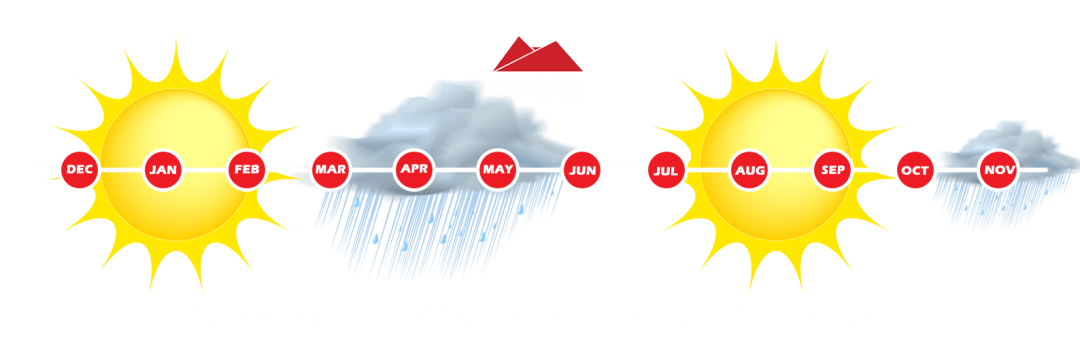
This is a good time to climb Kilimanjaro. The weather is quite stable with clear skies and the occasional shower. The temperatures are reasonably warm and the mountain is quite quiet.

The rains increase during March until April where the mountain becomes very wet and warm. The mountain is very quiet during this period. This period is known as the long rains and is the wettest period Kilimanjaro experiences.

The rain decreases into June and the weather turns very dry and clear as the months go on. Night time temperatures can be very cold at this time of year. June is a quiet time on the mountain but it gradually becomes busier as the year moves along.

This is considered peak climbing season on Kilimanjaro and the mountain can be very busy. The weather is warm and the skies are clear. Rain can still linger around the rain forest zones on Kilimanjaro but once above this the chances of rain are slim. The rains increase towards the end of October

The short rains begin at the start of November and carry on until mid December. The temperature drops and the clouds close in around Kilimanjaro. The mountain is usually quite quiet around this time. During December the mountain becomes busier again and the weather changes for the better. The 6 weeks around New Year are very busy on the mountain and the weather is quite stable with occasional showers.

Weather is a deciding factor

The Wet & Dry of Kilimanjaro

Deciding on the best time to climb Kilimanjaro is determined mainly by the weather. Tanzania experiences two rainy seasons and two dry seasons every year.
Wet-Dry-Season

KILIMANJARO DRY SEASON

sun-800 (1)

  • The Long Dry season which lasts from late June to mid-October, is the most pleasant time of year. During this time, rainfall is uncommon, while clear skies and plenty of sunshine are to be expected. Temperatures are relatively cool and can be chilly on early morning game drives.


  • The Short Dry season  – January and February constitute the short dry season.

Of course, the higher slopes of Kilimanjaro can experience sub-zero temperatures at any time of year.

KILIMANJARO WET SEASON
rain-800 (1)

  • The long rains usually last from early March to late May, bringing with them heavy afternoon downpours and high humidity. Temperatures at this time of year frequently exceed 86 degrees Fahrenheit (30 degrees Celsius).


  • The short rainy season (November and December) sees lighter, less reliable rains and the start of the hottest time of year, which lasts until the end of February. Temperatures during this period can get as high as 104 degrees Fahrenheit (40 degrees Celsius).

The rainy season shouldn’t put you off visiting Kilimanjaro. It is not always as wet as you may expect and there are some advantages. The mountain is very quiet during the raining season and for those hoping for snow on the summit it can usually be guaranteed during the rainy season.
  • Mara Kati Kati is a mobile camp strategically situated in north Serengeti, ideal for exploring the Mara Ecosystem. The camp offers comfortable accommodation together with the unique opportunity to enjoy a real safari experience on a camp. In its comfortable tents one will feel completely immersed in the surroundings and one can enjoy the rich animal life and vegetation of the area.

    An original form of accommodation which resembles the old camps of the first explorers in Africa, with all the commodities of today.

    The camp has been designed to cause a minimum impact on the environment. All of the infrastructure is mobile and the philosophy of the company is not to leave anything behind.


    The tents at Mara Kati Kati are meticulously designed to blend the essence of classic safari adventures with modern comforts. Each tent is furnished with plush bedding, locally inspired décor, and ensuite bathrooms equipped with hot showers and eco-friendly toiletries. The subtle lighting, soft linens, and rustic yet sophisticated furnishings create an ambiance that seamlessly merges the raw beauty of the wilderness with the elegance of a homey accommodation.

  •  

    Experience the Wild…

    Welcome to Tarangire Simba Lodge, Tarangire National Park is a gem on the northern safari circuit. Teeming with wildlife, especially in the dry season, this area is a safari-goers dream. Located near the new Sangaiwe Gate of Tarangire National Park. Tarangire Simba Lodge is situated in a wildlife-rich area with unhampered views to beautiful Lake Burunge, bordered by the park and a Wildlife Management Area. The setting is stunning; with a giant old Baobab tree anchoring one corner and a permeating feeling of real Africa.

    The lodge opened in mid 2015 (July) and has 24 classic tents under thatch. Resident wildlife includes lion, zebra, bushbuck, impala, porcupine, monkeys, warthog, mongoose and more. Elephant, buffalo, ostrich and giraffe frequently pass through while the bird life is prolific and vibrant.

    Areas surrounding national parks are critical for conservation. The location of Tarangire Simba Lodge creates a buffer between the park and the nearby village areas, which, although currently sparse in population, are under cultivation and could be subject to human/wildlife conflict. We work closely with the rangers at the nearby station to ensure that the wildlife is not compromised.


    During the dry season groups of elephant, giraffe, waterbuck, zebra and more come to a small waterhole located in front of the lodge. Lucky guests can watch wildlife right from their rooms or the elevated viewing platform near the pool.

    Guests are able to enter, exit and re-enter from the Sangaiwe gate of Tarangire National Park with ease.


    Fine hospitality for safari travellers

    Accommodation at Tarangire Simba Lodge is in sixteen classic canvas safari tents situated permanently under thatch. The spacious tents are constructed on platforms complete with wooden floors, large en-suite dressing room, toilet and shower. There are twin and queen tents; triples are possible. There is also a family tent with two queen-sized beds. Additionally there is an outdoor shower and each tent has a private veranda with views to the bush and Lake Burunge. Furnishings are handcrafted from African hardwood complimented with tastefully selected fabrics; electricity and hot water are solar powered. Full amenities are provided.

    If you’re lucky you may see wildlife right from your room or verandah!

    Each room has a torch (flashlight) and umbrella for you to use during your stay with us and there is a power strip to charge your devices.